
Psychedelic Assisted Therapy vs Antidepressants: A New Path for Depression Treatment
What You Need to Know?
Rapid Relief: Unlike traditional antidepressants, which can take weeks to show effects, Psychedelic-Assisted Psychotherapy often provides symptom relief within hours after administration.
Neuroplasticity Benefits: Psychedelic promotes synaptic growth and strengthens neural pathways, supporting better emotional regulation and resilience.
Combines with Psychotherapy: Psychedelic’s effects are maximized when integrated with guided psychotherapy, allowing patients to process and heal emotional traumas more effectively.
Administered in Clinical Settings: This therapy is always performed under medical supervision to ensure safety and efficacy.
How Traditional Antidepressants Work

Traditional antidepressants work by balancing brain chemicals such as serotonin and dopamine. They are usually taken daily and may take several weeks before results appear.
Although effective for some, these medications don’t help everyone. Side effects like fatigue, sleep changes, and emotional flatness can also make treatment difficult.
In short, antidepressants aim to regulate mood, but results often vary and improvement can take time.
How Psychedelic-Assisted Psychotherapy Works Differently

Psychedelic-assisted psychotherapy combines low-dose medical psychedelics with guided therapy sessions. Instead of targeting serotonin, psychedelics act on the NMDA receptors and boost glutamate, a neurotransmitter responsible for communication between brain cells.
This process encourages the brain to form new neural pathways — often leading to noticeable improvements within hours or days.
During sessions, clinicians help patients process emotions and insights that emerge, making psychedelic therapy both a medical and psychological experience.
Learn more in our Psychedelic Treatment for Depression Guide.
Psychedelic Assisted Therapy vs Antidepressants: Key Differences
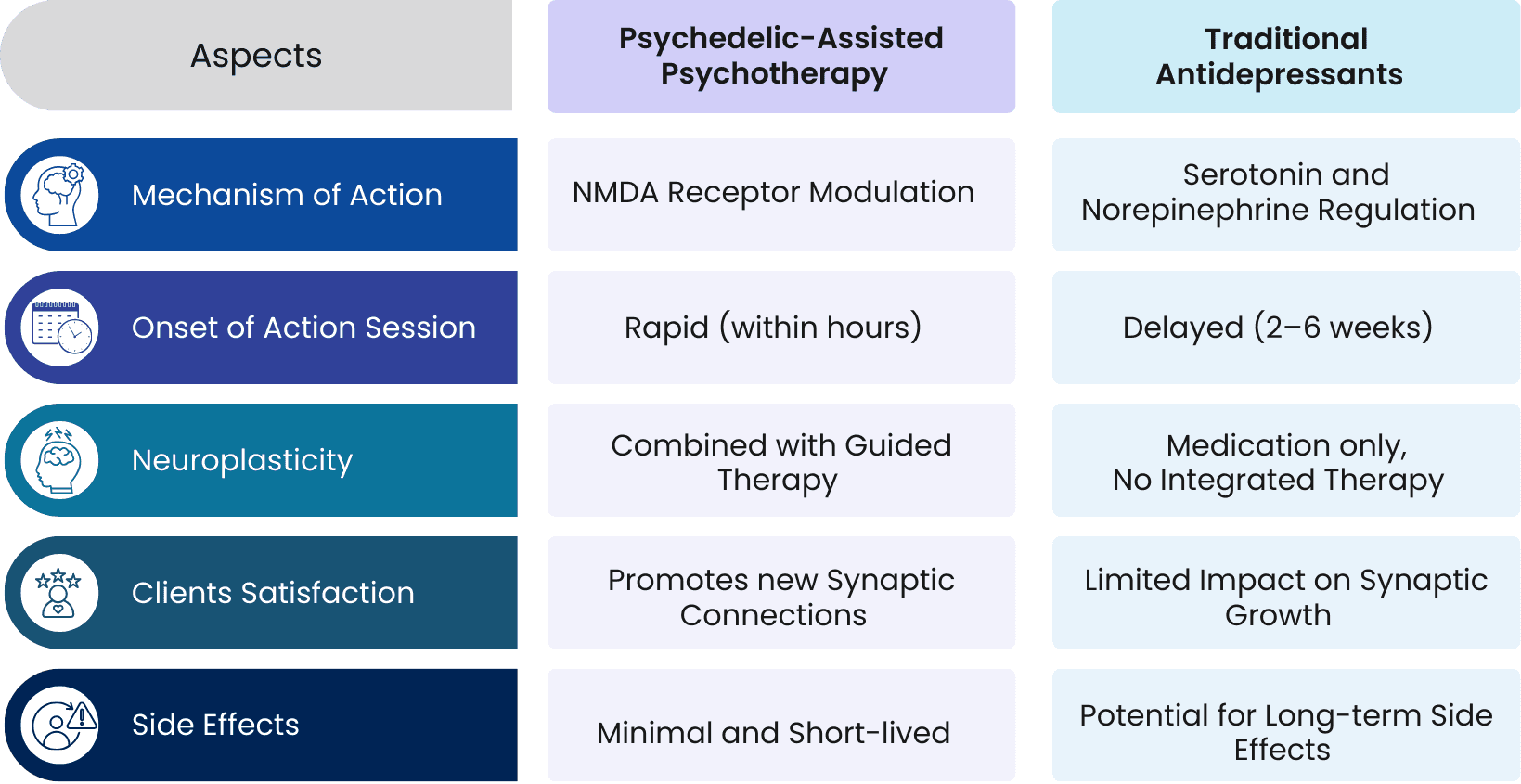
In contrast to daily medication, psychedelic therapy typically involves several sessions followed by maintenance treatments as needed. Many patients describe lasting clarity, motivation, and mood improvement.
Which Treatment Is Right for You?
Choosing between psychedelic therapy and antidepressants depends on your history, goals, and how you’ve responded to past treatments.
If multiple antidepressants haven’t worked, psychedelic-assisted psychotherapy may offer a new chance for relief.
Both approaches can be effective when guided by a qualified clinician.

The Role of Neuroplasticity
One of psychedelic’s most powerful benefits is its ability to boost neuroplasticity — the brain’s capacity to create new pathways and break old patterns.
In depression, negative thought loops become deeply ingrained. Psychedelic helps reopen these blocked pathways, making therapy more effective and long-lasting.
Researchers continue to study how psychotherapy during this window can strengthen healing and emotional resilience.
Final Thoughts
The comparison between psychedelic therapyvs antidepressants highlights how mental health care is evolving.
While antidepressants remain important, psychedelic-assisted psychotherapy offers a faster, more holistic approach, one that reconnects mind, body, and emotion.
If you or someone you know is struggling with depression, this therapy may provide the breakthrough you’ve been waiting for.
What You Need to Know?
Rapid Relief: Unlike traditional antidepressants, which can take weeks to show effects, Psychedelic-Assisted Psychotherapy often provides symptom relief within hours after administration.
Neuroplasticity Benefits: Psychedelic promotes synaptic growth and strengthens neural pathways, supporting better emotional regulation and resilience.
Combines with Psychotherapy: Psychedelic’s effects are maximized when integrated with guided psychotherapy, allowing patients to process and heal emotional traumas more effectively.
Administered in Clinical Settings: This therapy is always performed under medical supervision to ensure safety and efficacy.
How Traditional Antidepressants Work
Traditional antidepressants work by balancing brain chemicals such as serotonin and dopamine. They are usually taken daily and may take several weeks before results appear.
Although effective for some, these medications don’t help everyone. Side effects like fatigue, sleep changes, and emotional flatness can also make treatment difficult.
In short, antidepressants aim to regulate mood, but results often vary and improvement can take time.
How Psychedelic-Assisted Psychotherapy Works Differently
Psychedelic-assisted psychotherapy combines low-dose medical psychedelics with guided therapy sessions. Instead of targeting serotonin, psychedelics act on the NMDA receptors and boost glutamate, a neurotransmitter responsible for communication between brain cells.
This process encourages the brain to form new neural pathways — often leading to noticeable improvements within hours or days.
During sessions, clinicians help patients process emotions and insights that emerge, making psychedelic therapy both a medical and psychological experience.
Learn more in our Psychedelic Treatment for Depression Guide.
Psychedelic Assisted Therapy vs Antidepressants: Key Differences
In contrast to daily medication, psychedelic therapy typically involves several sessions followed by maintenance treatments as needed. Many patients describe lasting clarity, motivation, and mood improvement.
Which Treatment Is Right for You?
Choosing between psychedelic therapy and antidepressants depends on your history, goals, and how you’ve responded to past treatments.
If multiple antidepressants haven’t worked, psychedelic-assisted psychotherapy may offer a new chance for relief.
Both approaches can be effective when guided by a qualified clinician.
The Role of Neuroplasticity
One of psychedelic’s most powerful benefits is its ability to boost neuroplasticity — the brain’s capacity to create new pathways and break old patterns.
In depression, negative thought loops become deeply ingrained. Psychedelic helps reopen these blocked pathways, making therapy more effective and long-lasting.
Researchers continue to study how psychotherapy during this window can strengthen healing and emotional resilience.
Final Thoughts
The comparison between psychedelic therapyvs antidepressants highlights how mental health care is evolving.
While antidepressants remain important, psychedelic-assisted psychotherapy offers a faster, more holistic approach, one that reconnects mind, body, and emotion.
If you or someone you know is struggling with depression, this therapy may provide the breakthrough you’ve been waiting for.
/ / / / / / / /



Take the Next Step
With clinics across Canada, expert help is closer than you think. Take the first step towards a brighter future today
Navigation
Locations
Support
© 2026 BrainStim. All rights reserved.
Take the Next Step
With clinics across Canada, expert help is closer than you think. Take the first step towards a brighter future today
Navigation
Locations
Framer is a web builder for creative pros. Be sure to check out framer.com to learn more.
Support
© 2026 BrainStim. All rights reserved.

Take the Next Step
With clinics across Canada, expert help is closer than you think. Take the first step towards a brighter future today
Navigation
Locations
Framer is a web builder for creative pros. Be sure to check out framer.com to learn more.
Support
© 2026 BrainStim. All rights reserved.