Advanced mental health service opens in Kingston to support veterans, first responders
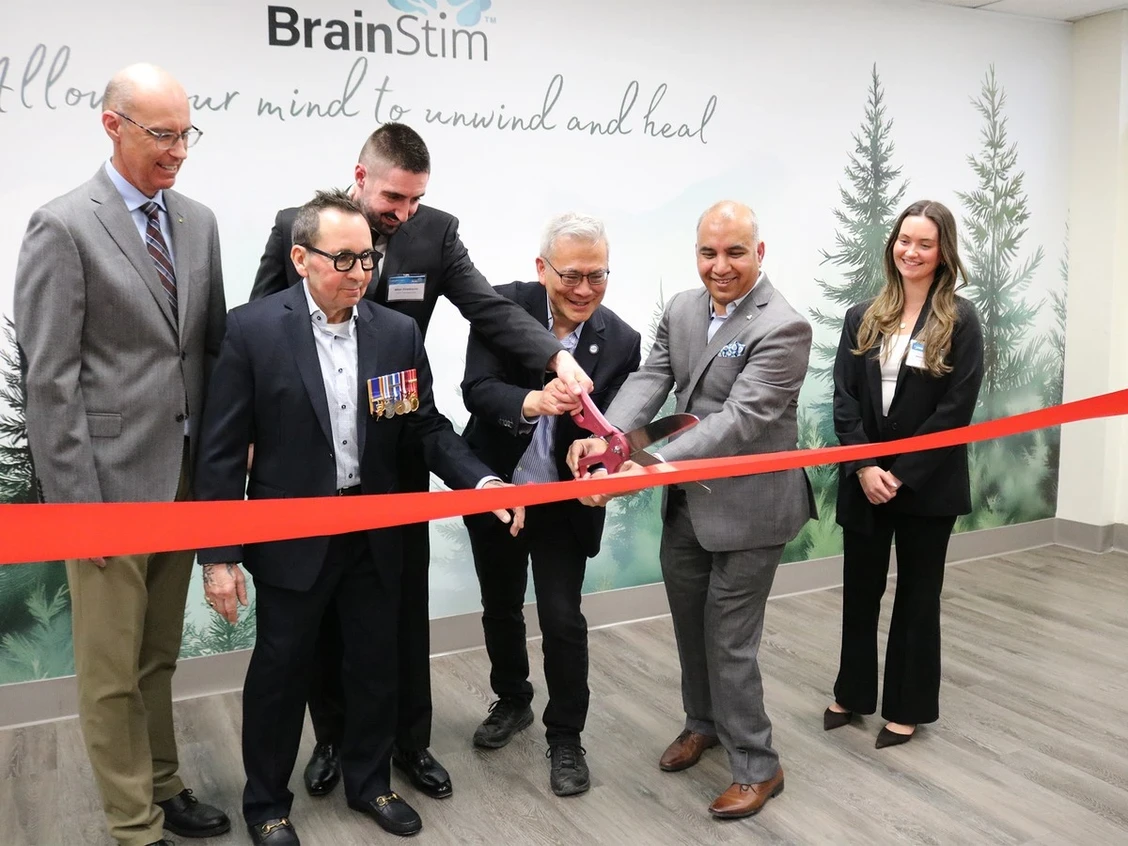
It’s called BrainStim and on Thursday, it opened its doors to the public to showcase its services.
What it offers is advanced mental health treatments that work on the brain in a non-invasive, without the use of medication.
What it uses is deep transcranial magnetic stimulation (TMS), a type of therapy that uses short magnetic pulses to stimulate brain neurons and regulate the brains circuits.
According to Kingston’s CEO and former biochemistry professor at Queen’s University, Vinay Singh, the core team in Kingston includes nurses, a patient coordinator, a TMS technician and a psychotherapist.
Singh said when a person suffering from a mental health ailment has exhausted all treatment options, that’s where his clinic can help.
The process begins with a referral, a psychiatric evaluation, personalized treatment, a psychiatrist follow-up, and maintenance.
The clinic in Kingston has three different TMS devices, each made up of H-coils that help a different ailment.
“It’s like a light goes on inside the brain,” said Singh. “We have stories to tell that someone was almost ready to end their life and now they want to look forward to Christmas. There were people who were just isolated from the families and now they’re getting together.”
The treatment, according to Singh, not only helps treat the brain, but has also helped individuals improve on their sleep.
“Brain plasticity has been well established. The neuroscience, the newer generation of the medicine, has established the fact that the brain changes itself. We know neuroplasticity happens. We know there are tools, so magnetic stimulation is one way of doing that neuroplasticity,” explained Singh, who added in simpler terms, it’s a way to rewire the brain.
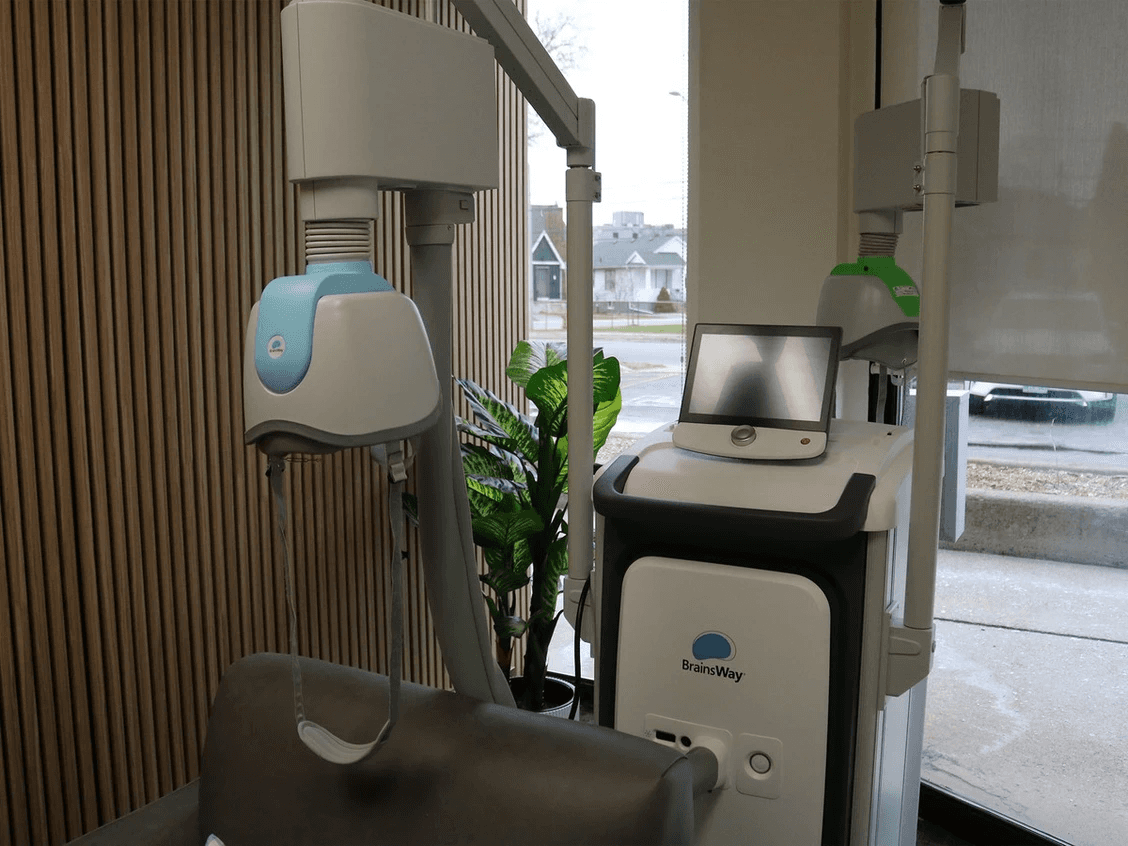
One of three deep transcranial magnetic pulsing machines used at the BrainStim clinic in Kingston on April 9, 2026. Photo by Maegen Kulchar /The Kingston Whig-Standard
Milan Zivadinovic, a veteran navigation lead from the clinic in Vancouver, was in Kingston helping prepare for the launch. He explained what it would be like to receive treatment.
“Once the client is here, we find their motor threshold, and that’s how we’ll calibrate the machine to really know what level of stimulation we’re using,” said Zivadinovic. “The treatments, they’re very simple. Once we place the helmet in the right spot, it’s three to 10 minutes depending on the protocol, and that needs to be spaced an hour apart. So you’re looking at six hours a day if they are going to do the 30 sessions in a week.”
Zivadinovic said patients can also choose to spread their sessions over two weeks.
He added that there is no down time or long-term side effects following treatment with most patients seeing a 50- to 60-per-cent reduction in symptoms.
According to Zivadinovic, the TMS treatment can also be followed up with a ketamine-assisted process. Ketamine, according to the clinic, is a fast-acting relief from depression and anxiety that helps rewire the brain and boost resilience.
While the treatment is not covered by OHIP, Singh said some insurance companies will cover a part of the cost, which is approximately $7,000.
While not everyone is covered, he’s hoping to get that changed down the road.
“That is our goal. We, we are working on the policy side to make sure that we make it happen for, insurance, to be covering it,” Singh said.
He also reiterated that although they are providing treatment, they are not here to compete with local hospitals.
“We want to work with the hospitals. It’s really important for hospitals to understand when private businesses come up. We are doing something that hospitals don’t do. We are able to provide the care where hospitals stop,” he said.
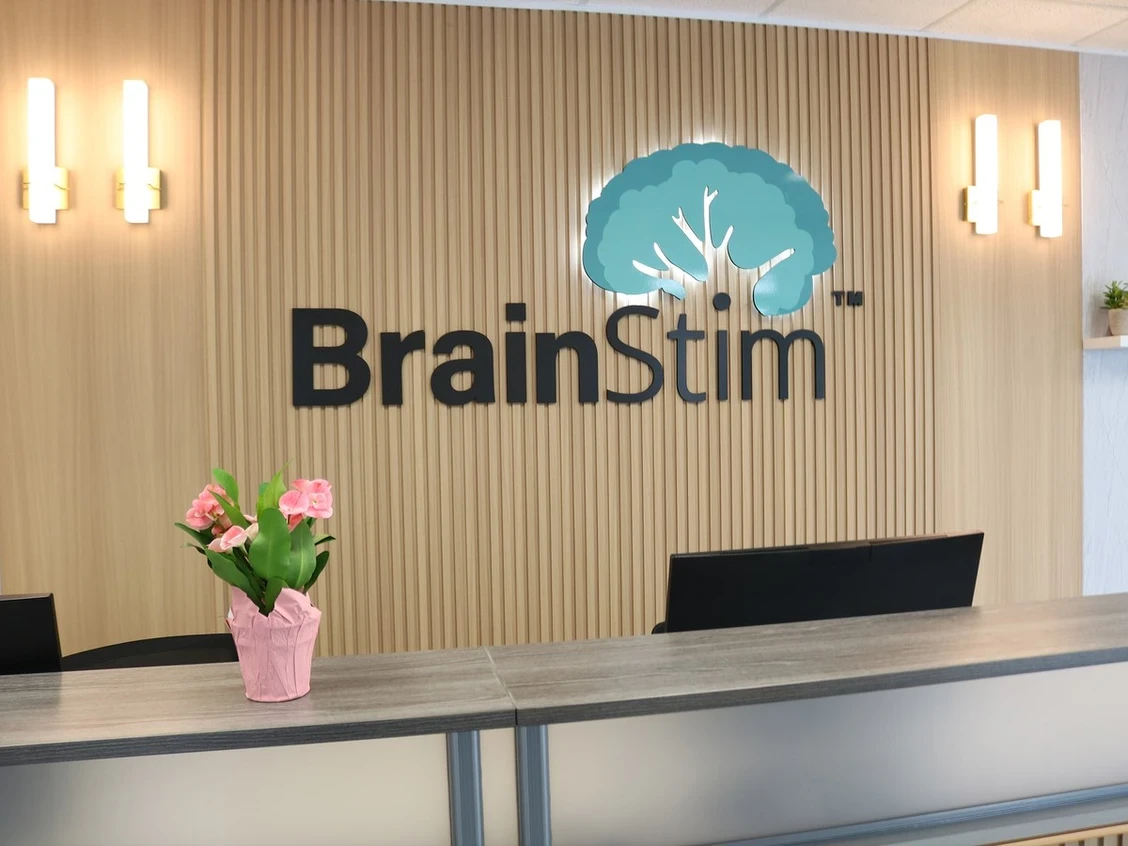
The reception area of the new BrainStim clinic in Kingston on April 9, 2026. Photo by Maegen Kulchar /The Kingston Whig-Standard
Among the crowd Thursday were members from the Royal Canadian Legion Branch 560.
“We came to see what the program was like and what it’s going to do for our veterans, and we’d be happy to promote it to our veterans and the legion,” said Judy Wright, who was happy to see another clinic aimed at helping veterans in a military town.
“So many people need the help, and this is the least invasive. It’s awesome, I think,” said Laura Briggs. “I don’t think it will be nearly as devastating for anyone to go through this type of a treatment and if it’s going to be helpful, I think it’s amazing.”
The Kingston clinic is the sixth location for BrainStim, with others in Vancouver, Surrey, Ottawa, Perth and Halifax. Throughout the year, the company is hoping to open up three more across Canada, bringing the total to 10.