Clinical Services
Rediscover Hope with Deep TMS Therapy
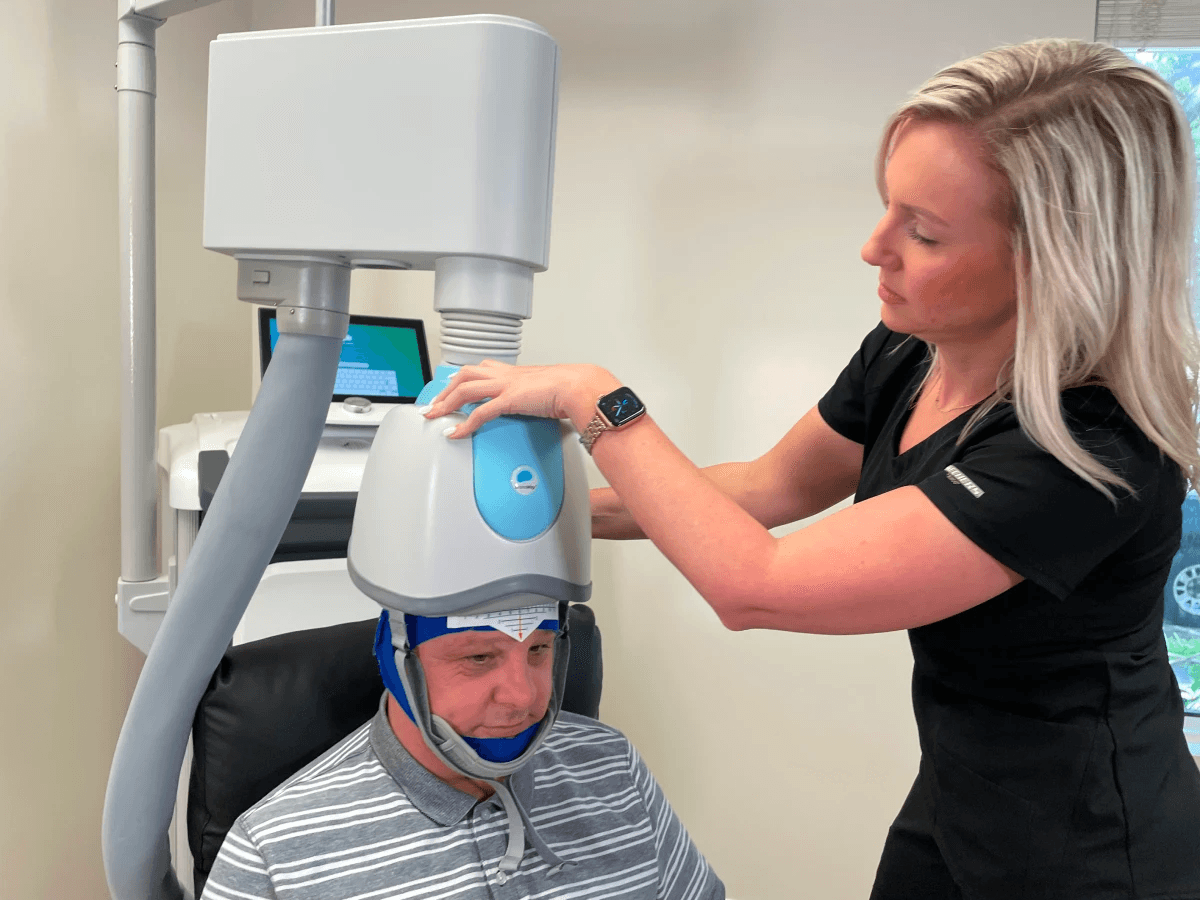
Deep Transcranial Magnetic Stimulation (TMS) is a non-invasive treatment that effectively reduces symptoms of depression, anxiety, and OCD by stimulating brain activity.
Safe
Compassionate
Transformative
What is Deep TMS?
Deep Transcranial Magnetic Stimulation (TMS) is a non-invasive, FDA & Health Canada-approved treatment that uses magnetic pulses to stimulate brain areas responsible for mood regulation. It is an effective, non-pharmacological option for individuals who have not responded adequately to antidepressant medications or psychotherapy. Health Canada and FDA cleared for Major Depressive Disorder, OCD, and anxious depression. Evidence supports its use for additional conditions including PTSD and addiction.
Types of Neuromodulation we offer at BrainStim:

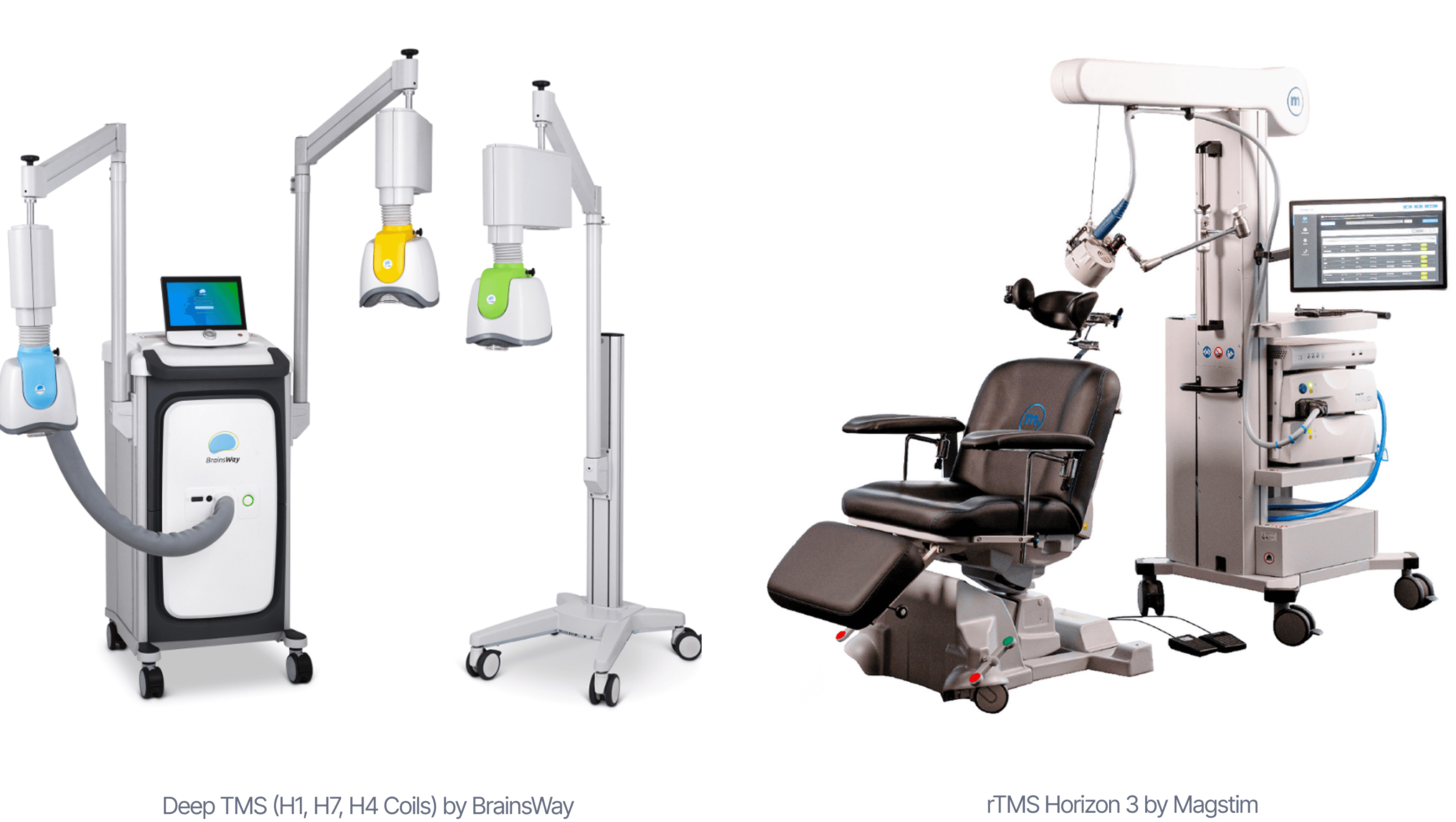
Repetitive TMS (rTMS)
A proven treatment that uses repeated magnetic pulses to stimulate brain areas involved in mood regulation. It is commonly used for depression, anxiety, and OCD.
Deep TMS (dTMS)
Reaches deeper brain structures for stronger and longer-lasting effects. It is effective for severe depression, OCD, and PTSD, even when other treatments haven’t worked.
Neuro Feedback
A gentle, non-invasive therapy that helps support brain function and recovery, often used for memory issues and cognitive decline.
Transcranial direct current stimulation(tDCS)
Uses mild electrical currents to help improve brain activity. It may enhance focus, memory, and overall brain function for patients with neurological conditions.

How does Deep TMS work?

Magnetic Pulses Target the Brain
A coil is placed on the scalp, delivering magnetic pulses to stimulate specific brain areas linked to mood regulation.

Neural Activity is Modulated
These pulses activate or regulate neurons in areas like the prefrontal cortex, which is often underactive in depression.
Mood and Symptoms Improve Over Time
With repeated sessions (usually over several weeks), brain activity normalizes, leading to reduced depression and anxiety symptoms.
Improvement Results
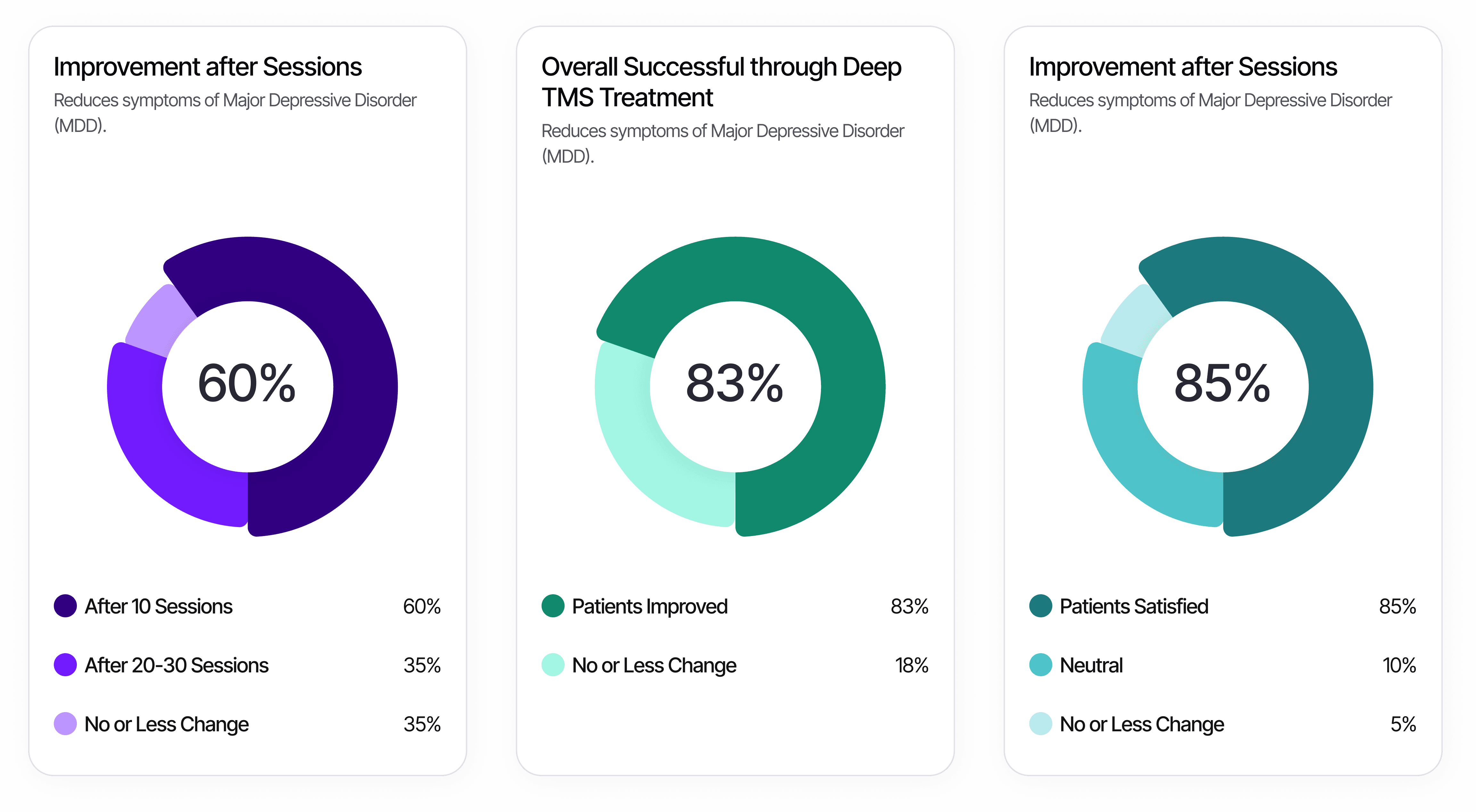
Sources: ScienceDirec , BrainsWay Clinical Results
Brain activity before and after Deep TMS treatment
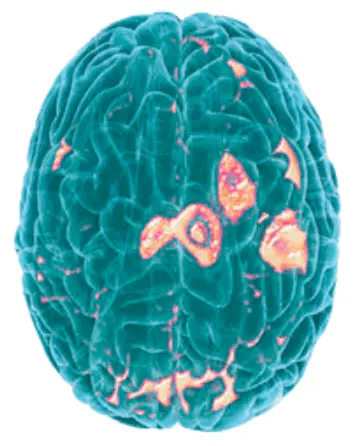
Few or small spots (In Depressed Brain)
Indicates reduced activity in key areas like the prefrontal cortex — associated with symptoms like sadness, low energy, and poor focus.

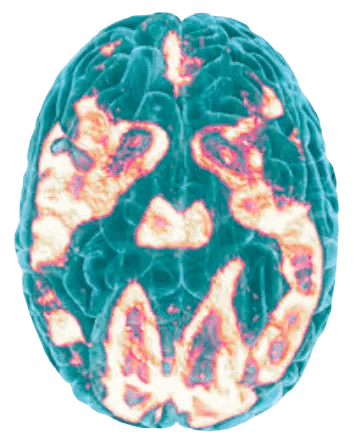
Large, bright spots (After Deep TMS)
Shows increased and healthy activation, especially in areas that regulate mood, thinking, and motivation.
PET scan images show increased electrical activity in key regions following TMS, especially in areas linked to mood regulation like the left DLPFC. This illustrates how Deep TMS can help restore normal brain function in depression.
Conditions Deep TMS can help with:
Deep TMS is primarily used for individuals who have not responded well to traditional medication. It is FDA-approved for depression and OCD, with research indicating its effectiveness for conditions like anxiety, PTSD, OCD and Substance Use. With minimal side effects, Deep TMS provides a promising, non-invasive alternative for those seeking relief from mental health and neurological disorders.

Depression
Reduces symptoms of Major Depressive Disorder (MDD).
Anxiety
Targets the neural circuits involved in anxiety, reducing symptoms of chronic worry, panic, and generalized anxiety disorder.
PTSD
Helps process trauma-related stress and emotional dysregulation.
OCD
Relieves obsessive thoughts and compulsive behaviors..
Addiction
Helps break negative behavioral patterns.